


If you’re curious about the 10 best languages in *Lord of the Rings*, you’ll find a rich tapestry woven throughout Middle-earth. Elvish tongues like Quenya and Sindarin shine with beauty and history. Dwarven Khuzdul and Númenórean Adûnaic reflect strength and culture. Mannish Westron acts as a unifying force, while Rohirric and Entish reveal unique identities. Even dark languages like Black Speech serve significant roles. Stick around to uncover more fascinating insights about these languages and their impact on the story.
The Languages of Middle-earth: An Overview
Middle-earth is a rich tapestry of languages, each woven with its own history and cultural significance. You’ll encounter tongues that reflect the diverse peoples inhabiting this world. From the melodic Elvish languages to the guttural speech of Orcs, each language captures the essence of its speakers. The Common Speech serves as a bridge between cultures, allowing characters from various backgrounds to communicate. You’ll notice how language influences relationships, alliances, and even conflicts. As you explore, pay attention to the nuances and dialects that reveal character traits and histories. The languages of Middle-earth aren’t just tools for communication; they’re essential threads that enrich the narrative and deepen your understanding of this enchanting domain.
Quenya: The Ancient Elvish Tongue
Among the myriad languages of Middle-earth, Quenya stands out as the ancient tongue of the Elves, embodying beauty and sophistication. When you hear it spoken, you can’t help but feel its lyrical quality and rich history. Quenya, often referred to as “High Elvish,” was used in poetry, songs, and formal occasions, showcasing the Elves’ deep connection to nature and art. As you explore its grammar and vocabulary, you’ll notice its complexity, reflecting the wisdom of its speakers. Learning Quenya opens a door to the culture and lore of Tolkien’s world, allowing you to appreciate the subtleties of Elvish heritage. Immerse yourself in this enchanting language, and you’ll find it resonates with the elegance of the Elves themselves.
Sindarin: The Most Widely Spoken Elvish Language

Sindarin, often regarded as the most widely spoken Elvish language, breathes life into the cultures of Middle-earth. You’ll find its melodic tones echoing through the lands, connecting various races and regions. This language isn’t just a means of communication; it represents a rich heritage and deep-rooted connections among Elves.
- Cultural Significance: Sindarin reflects the history and traditions of the Elves.
- Widespread Use: It’s spoken by various Elvish communities across Middle-earth.
- Influence on Other Languages: Sindarin has impacted the languages of Men and Dwarves.
- Poetic Nature: Its lyrical quality enriches songs and poetry.
- Evolution: The language has evolved, showcasing the dynamic nature of Elvish culture.
Khuzdul: The Hidden Tongue of Dwarves
While Sindarin weaves the stories of Elves, Khuzdul stands as the secretive language of Dwarves, shrouded in mystery and tradition. This ancient tongue reflects the deep-rooted culture and pride of the Dwarven race. You’ll notice that Khuzdul is rarely spoken outside of their halls, as Dwarves guard it fiercely. The language itself is rich with sounds that evoke the strength of stone and metal, making it perfect for their craftsmanship.
When you hear Khuzdul, you’re listening to a language steeped in history, used primarily for sacred rituals and ceremonies. Its complexity and limited use add to its allure, making it a symbolic treasure among Dwarves. Knowing Khuzdul gives you a glimpse into their world, a domain where language truly matters.
Adûnaic: The Language of Númenor
Adûnaic, the majestic language of Númenor, captures the essence of a once-great civilization. This tongue reflects the culture, history, and aspirations of its speakers. You’ll find that Adûnaic isn’t just a means of communication; it embodies the spirit of an age long past. Here are some key aspects that highlight its significance:
- Cultural Heritage: Represents the pride and traditions of Númenórean society.
- Linguistic Complexity: Features a rich vocabulary and intricate grammar.
- Historical Impact: Influenced other languages, including Quenya and Sindarin.
- Symbol of Power: Used in royal decrees and formal ceremonies.
- Mythical Roots: Tied to the legendary tales of Middle-earth’s creation.
Black Speech: The Dark Language in Lord of the Rings
As Númenor’s grandeur faded, another language emerged from the shadows—Black Speech, the sinister tongue of Mordor. Created by Sauron, it’s a harsh and guttural language designed to instill fear and dominance. You can almost feel its malevolence in the way it sounds, reflecting the dark intent behind its creation. Black Speech serves as a unifying force for Sauron’s minions, emphasizing loyalty to their dark lord. When you hear it spoken, it’s often accompanied by images of chaos and destruction. Even the inscription on the One Ring, “One Ring to rule them all,” encapsulates its power. Understanding Black Speech offers a glimpse into the corrupted minds of its users, revealing the depths of evil that lie within Middle-earth.
Rohirric: Language of the Horse-lords
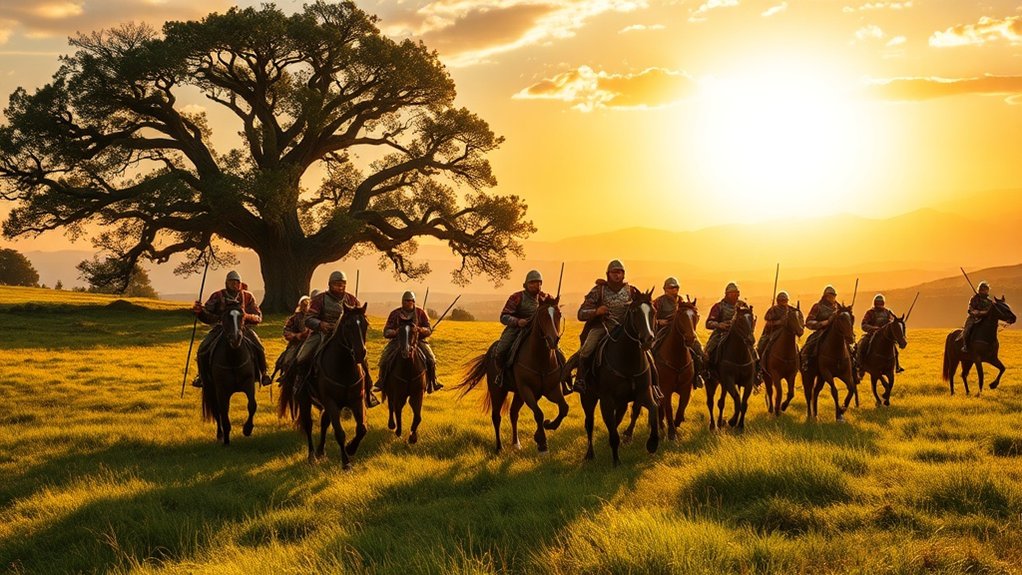
Rohirric, the language of the Horse-lords, resonates with the spirit of the Riders of Rohan. This tongue reflects their deep connection to horses and their rich cultural heritage. When you hear Rohirric, you can almost feel the gallop of steeds beneath you. Its melodic quality captures the heart of the plains and the bravery of its speakers.
- It emphasizes kinship and loyalty among the Riders.
- The vocabulary often relates to nature and horses.
- Rohirric is a symbol of freedom and nobility.
- It’s steeped in oral tradition, echoing tales of heroism.
- The language embodies the valor and resilience of its people.
Embracing Rohirric lets you appreciate the essence of Rohan and its legendary warriors.
Entish: The Unique Language of Ents
While the Riders of Rohan embody a fierce spirit through their language, the Ents offer a striking contrast with their own unique form of communication. Entish is slow and deliberate, reflecting the ancient, contemplative nature of these tree-like beings. You’ll notice that their speech doesn’t rush; instead, it’s filled with long, meandering phrases that often take time to unfold. This language isn’t just about words; it’s deeply tied to the forest and the life around them. When an Ent speaks, you can sense the weight of centuries in each syllable. You might find it hard to grasp at first, but understanding Entish means appreciating the wisdom and patience of the forest itself, making it a truly fascinating aspect of Tolkien’s world.
Mannish Languages: Exploring the Common Tongue of Men
Mannish languages form the backbone of communication among the diverse peoples of Middle-earth. You’ll find these languages, like Westron, serve as a unifying force among Men, allowing for trade, diplomacy, and storytelling. Their adaptability reflects the cultures they represent, showing how language evolves with society.
- Westron is the most widely spoken, acting as a bridge between different regions.
- Diverse dialects reveal the rich histories of various kingdoms.
- Influence of Elvish showcases the blend of cultures in Middle-earth.
- Trade and diplomacy rely heavily on these languages for effective interaction.
- Myth and lore are passed down through stories, preserving the essence of Mannish heritage.
Understanding these languages deepens your appreciation of Tolkien’s world.
Language’s Role in Tolkien’s World
Languages in Tolkien’s world do more than just facilitate communication; they shape cultures and identities. Each language reflects the history and values of its speakers. For instance, Elvish tongues like Quenya and Sindarin embody the beauty and depth of Elven culture, emphasizing art and nature. In contrast, the harsh guttural sounds of Black Speech signify power and domination, revealing the sinister nature of Mordor. When you listen to the characters speak, you sense alliances and tensions, as language acts as a bridge or barrier. The way characters use language offers insight into their motivations and backgrounds. By understanding these languages, you deepen your grasp of Middle-earth’s rich tapestry and the intricate relationships between its diverse peoples.
Frequently Asked Questions
What Inspired Tolkien to Create These Languages?
Tolkien’s love for philology and ancient languages inspired you. He wanted to create rich, immersive worlds, so he crafted languages that reflected the cultures and histories of his characters, enhancing the depth of Middle-earth.
Are There Any Real-World Languages That Influenced Tolkien’s Creations?
Yes, Tolkien drew inspiration from several real-world languages. Old English, Finnish, and Welsh heavily influenced his creations, shaping the phonetics and structure of languages like Elvish, giving them depth and authenticity you can appreciate.
How Can I Learn These Fictional Languages?
You can learn these fictional languages by exploring online resources, joining language communities, or using dedicated textbooks. Practice speaking and writing regularly, and immerse yourself in the lore to deepen your understanding and appreciation.
Did Tolkien Use Linguistics in His Writing Process?
Tolkien wove linguistics into his writing like a master weaver, crafting entire cultures around languages. You’ll find his passion for phonetics and grammar transformed Middle-earth into a vibrant tapestry of life and lore.
Are There Any Books Dedicated to Tolkien’s Languages?
Yes, there are several books dedicated to Tolkien’s languages. You might enjoy “The Languages of Tolkien’s Middle-earth” by Ruth Noel or “An Introduction to Elvish” by Jim Allan, which explore his linguistic creations in depth.
At a Glance
You might think languages in “The Lord of the Rings” are just background noise, but they’re key to understanding the rich tapestry of Middle-earth. Each tongue adds depth to its cultures and characters, enhancing your experience as you journey through Tolkien’s world. By exploring these languages, you’ll uncover hidden meanings and connections that make the story even more immersive. So, plunge into the languages of Middle-earth and discover a whole new layer of adventure waiting for you!


