


In the Vampire-Lycan War, betrayal’s a key player that transforms alliances and deepens animosities. You see, skirmishes escalate as vampires exploit lycan weaknesses and lycans counter with strategic deceits of their own. Each act of betrayal not only shifts loyalties but also breeds paranoia, shaping the battlefield’s landscape. This constant shift in trust complicates characters’ relationships, pushing them toward revenge. Understanding these dynamics reveals much about their struggles, and there’s more to uncover about what drives this conflict.
Understanding the Origins of the Vampire-Lycan Conflict

To truly grasp the Vampire-Lycan conflict‘s origins, you need to explore the deep-seated grudges and misunderstandings that sparked this age-old feud. At the heart of it lies a clash of cultures: vampires, with their thirst for power and dominance, and lycans, who cherish their freedom and fierce loyalty. Miscommunication fueled animosities, as each side misinterpreted the other’s intentions. The vampires saw the lycans as savage beasts, while lycans viewed vampires as ruthless manipulators. These perceptions solidified into stereotypes, breeding distrust. As skirmishes erupted, each group retaliated, deepening the divide. Ultimately, it wasn’t just battles that ignited the war but a complex web of fears and misconceptions, laying the groundwork for a conflict that would echo through the ages.
Key Betrayals That Shaped the War’s Course
Betrayal has often been the catalyst for major turning points in the Vampire-Lycan War, influencing both strategy and alliances. Take, for instance, the defection of a prominent Lycan leader to the vampire side. This unexpected shift not only provided vital intelligence but also weakened the Lycan’s morale. Conversely, a vampire noble’s secret pact with a rogue Lycan faction led to devastating ambushes against their own kin, fracturing trust among the vampire ranks. You can’t overlook the betrayal of the ancient treaty, which sparked a full-scale conflict after centuries of uneasy peace. Each of these betrayals reshaped loyalties and strategies, proving that in this war, trust is as deadly as any weapon.
Understanding Betrayal as a Survival Tool in the War

While loyalty often seems like the ideal foundation in wartime, betrayal has emerged as an essential survival tool in the Vampire-Lycan War. You’ve seen how strategic deceit can turn the tide, providing an edge when the stakes are high. Here’s why betrayal can be critical:
- Information Control: Betraying a trusted ally might grant you access to essential intel about enemy plans.
- Alliances Shift: Switching sides can secure temporary safety, allowing you to survive longer in a hostile environment.
- Distraction Tactics: A well-placed betrayal can confuse enemies, diverting their attention while you regroup or launch an attack.
Understanding these dynamics helps you navigate the tumultuous waters of war, where survival often means making hard choices.
How Betrayal Defines Characters: Heroes or Villains?
In the chaos of the Vampire-Lycan War, betrayal often shapes the identities of those involved, turning them into either heroes or villains. You see, a single act of treachery can redefine loyalty and purpose. For some, betrayal reveals hidden strengths, pushing them to rise as champions of their kind. You might find a once-revered vampire choosing to side with lycans, driven by a thirst for justice rather than power. Conversely, others succumb to darkness, letting betrayal fuel their villainy. A lycan who betrays his pack for personal gain may become a feared adversary, lost to ambition. Ultimately, these choices carve paths that determine who stands as a hero and who falls into the shadows as a villain.
The Influence of Betrayal on Trust and Alliances
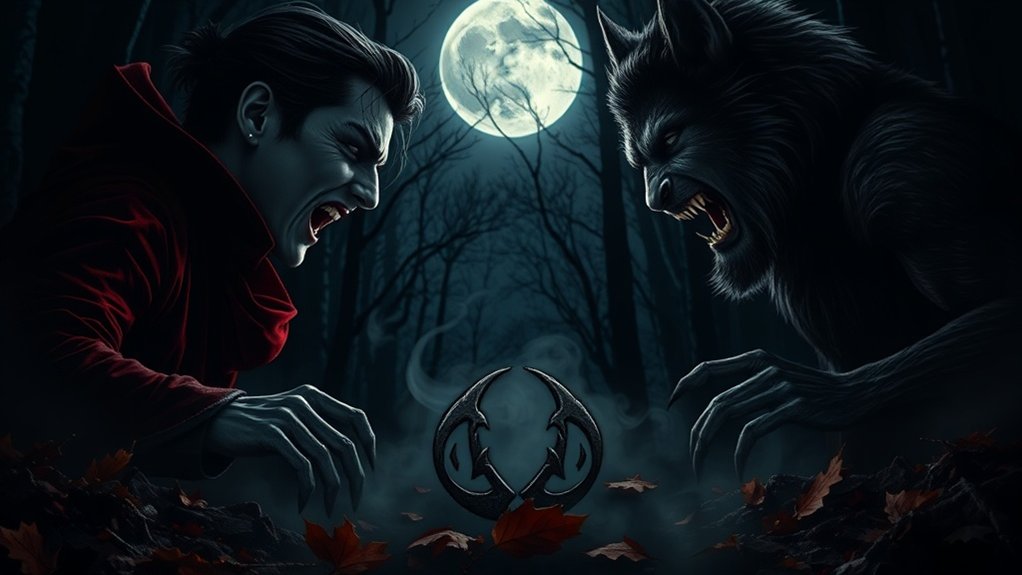
Trust and alliances crumble quickly in the wake of betrayal, leaving everyone questioning loyalties. In the Vampire-Lycan War, this distrust has far-reaching consequences. You see, betrayal shifts the balance of power and forces factions to reevaluate their relationships. It often leads to:
- Paranoia: Allies start second-guessing each other, fearing hidden agendas.
- Divisions: Once-unified fronts splinter into factions, as betrayal sows seeds of doubt.
- Unexpected Alliances: Former enemies might unite against a common threat, complicating the landscape.
As you navigate this treacherous environment, you realize that the fabric of trust is fragile. One act of treachery can unravel years of cooperation, making survival dependent on cautious choices and new, albeit shaky, connections.
How Betrayal Drives the Story Forward
Betrayal acts as a catalyst, propelling the narrative forward and intensifying conflicts within the Vampire-Lycan War. When characters switch allegiances or reveal hidden agendas, the stakes rise dramatically. You feel the tension as trust erodes, leading to unexpected confrontations and shifting loyalties. Each act of betrayal unravels secrets, exposing vulnerabilities that heighten the urgency of the conflict. You can’t help but wonder who’ll betray whom next, keeping you on the edge of your seat. As alliances crumble, new factions emerge, altering the dynamics of power. This relentless cycle of betrayal not only drives the plot but also keeps you invested, keen to see how each twist impacts the ongoing struggle between vampires and lycans.
The Psychological Effects of Betrayal on Characters

While the thrill of the Vampire-Lycan War keeps you on your toes, the psychological effects of betrayal run deep within its characters. Trust shatters, leaving scars that shape their actions and decisions. You see how betrayal breeds paranoia, isolation, and anger, altering their very essence.
- Paranoia: Characters constantly second-guess allies, fearing hidden agendas.
- Isolation: Betrayal distances them from others, creating emotional barriers.
- Anger: Feelings of rage fuel their motivations, pushing them toward revenge.
These psychological burdens complicate their relationships, often leading to tragic outcomes. As you witness their struggles, you’re reminded that betrayal isn’t just a plot device; it’s a profound emotional experience that resonates deeply within each character.
Lessons Learned: Betrayal and the Pursuit of Power
As the stakes rise in the Vampire-Lycan War, the lessons learned from betrayal become essential in the pursuit of power. You realize that trust can be a weapon, wielded by those who seek to undermine your position. Each betrayal teaches you to be vigilant, to question motives, and to recognize allies from enemies. You understand that power isn’t just about strength; it’s about strategy and perception. Those who betray often do so for their gain, revealing their weaknesses and ambitions. You adapt your tactics, using betrayal as a catalyst for growth. In this ruthless landscape, you learn that knowledge of betrayal can fortify your resolve, guiding your decisions and shaping your path to dominance in a world fraught with treachery.
The Future of the War: Will Betrayal Continue?

Given the volatile nature of the Vampire-Lycan War, it’s clear that betrayal isn’t going anywhere anytime soon. As you look ahead, consider how betrayal will shape the future of this conflict. Alliances are constantly shifting, and trust remains a rare commodity.
- Power Struggles: With both sides vying for dominance, treachery will likely become a tool for gaining the upper hand.
- New Alliances: Expect unexpected partnerships to emerge, fueled by shared interests or mutual enemies.
- Personal Vendettas: Individual grudges will continue to spark acts of betrayal, igniting larger conflicts.
In this chaotic landscape, it’s only a matter of time before betrayal rears its head again, making the war even more unpredictable.
Frequently Asked Questions
How Do Cultural Perceptions of Betrayal Differ Between Vampires and Lycans?
Cultural perceptions of betrayal differ considerably. Vampires often view it as a strategic maneuver, while lycans see it as a personal affront. You can sense the tension when each group confronts their own definitions of loyalty.
What Historical Events Influenced the Concept of Betrayal in This Conflict?
Historical events like territorial disputes, power struggles, and alliances gone wrong shaped your understanding of betrayal. Each encounter between vampires and lycans deepened mistrust, influencing how you perceive loyalty and treachery within this ongoing conflict.
Are There Notable Examples of Betrayal in Other Mythical Wars?
In ancient myths, Achilles’ betrayal by Patroclus and the treachery of Loki against the gods vividly illustrate betrayal’s destructive power. You see how trust shatters, leading to chaos and heartbreak in epic battles.
How Do Non-Combatants Experience Betrayal During the War?
Non-combatants often feel betrayal when allies abandon them, families are torn apart, or trusted leaders make dishonorable decisions. You witness the erosion of community trust and the pain of loved ones caught in conflict.
What Role Does Betrayal Play in Vampire and Lycan Mythology?
Betrayal in vampire and lycan mythology often fuels conflict, highlighting themes of loyalty and revenge. You’ll see characters torn between love and duty, showcasing how trust can shatter and lead to tragic consequences.
At a Glance
In the vampire-lycan war, betrayal weaves a complex tapestry of survival, trust, and power. Each act of treachery not only reshapes alliances but also defines characters, blurring the lines between heroes and villains. As you ponder the future, can true loyalty ever emerge from such chaos? The scars of betrayal run deep, suggesting that even as the war evolves, its haunting echoes will continue to influence every move made in the shadows.


