

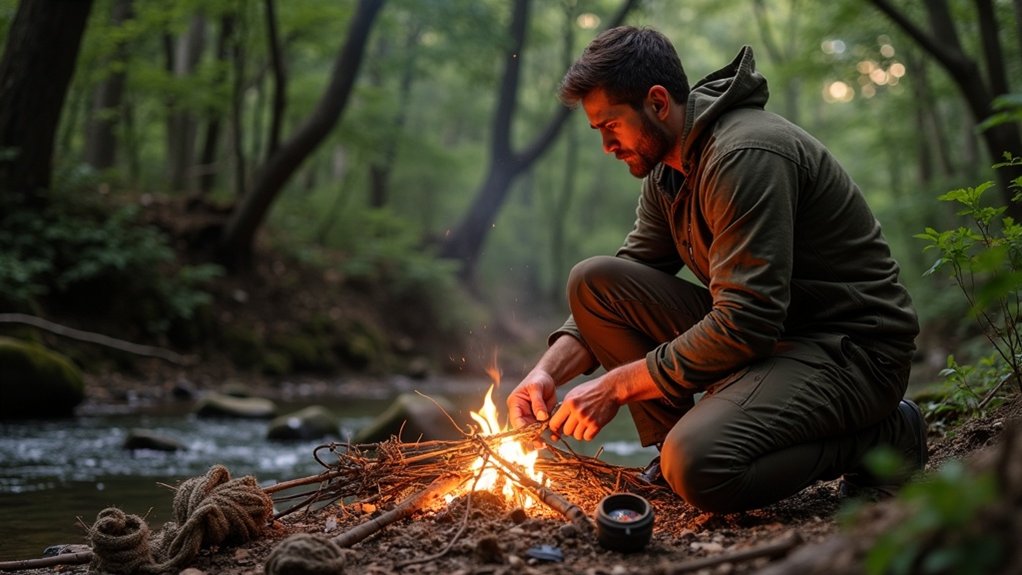
You should master essential survival skills before it’s too late. Start by learning wilderness navigation with a map and compass to find your way. Know how to build a fire in any condition and understand first aid basics, like CPR and wound care. Sourcing food and water is vital too; identify edible plants and purify water before drinking. Plus, being prepared at home for emergencies can save lives. There’s so much more to explore on how to stay safe.
Essential Wilderness Navigation Techniques

When you step into the wilderness, knowing how to navigate can be your lifeline. Start by familiarizing yourself with a map and compass. These tools aren’t just for show; they’ll help you pinpoint your location and chart a course. Always orient your map to the landscape, aligning it with recognizable landmarks. Practice reading topographical lines, as they indicate elevation changes and terrain features.
If you’re venturing into less marked areas, consider using natural navigation techniques. Observe the sun’s position or the moss on trees, which can guide your direction. Don’t forget to keep track of your route; noting landmarks and distances helps prevent getting lost. Trust your instincts, but always have a solid plan in place.
How to Build a Fire in Any Condition
Building a fire in any condition is an essential survival skill that can provide warmth, cooking capabilities, and a signal for help. To succeed, follow these steps:
- Gather Materials: Collect dry tinder (like leaves or grass), kindling (small sticks), and larger logs. Look for natural shelter from wind or moisture.
- Create a Base: Use stones or a fire ring to contain your fire. This keeps it stable and prevents spreading.
- Build the Fire: Arrange your tinder in the center, stack kindling around it in a teepee shape, and then add larger logs gradually.
- Ignite: Use matches, a lighter, or a fire starter. If conditions are damp, consider using dryer lint or waxed paper to help ignite the tinder.
Stay safe and enjoy the warmth!
Essential First Aid Skills for Survival

While you might hope to avoid emergencies in the wild, knowing essential first aid skills can mean the difference between life and death. Familiarize yourself with CPR; it’s vital if someone’s not breathing. Learn how to control bleeding using direct pressure and elevation. For burns, cool the area with running water and cover it with a sterile dressing. Recognize the signs of shock—pale skin, rapid pulse—and keep the person lying down and warm. If someone has a sprain or fracture, immobilize the injury and avoid moving them unless necessary. Finally, practice wound care: clean the area, apply antiseptic, and cover it properly. These skills can save lives, so make sure you’re prepared before heading out.
Food and Water Sourcing in the Wild
Understanding how to source food and water in the wild is essential for survival, especially if you find yourself stranded. You can’t rely on convenience stores out there, so here’s what you need to know:
- Water Sources: Look for streams, rivers, or lakes. Always purify water by boiling or using purification tablets before drinking.
- Edible Plants: Familiarize yourself with local flora. Some common edibles include dandelions, clover, and wild berries.
- Fishing: Use improvised nets or hooks to catch fish. Many rivers and lakes are teeming with them.
- Foraging Insects: High in protein, insects like crickets and ants can be a great food source. Just avoid brightly colored ones, as they might be toxic.
Stay alert, and trust your instincts!
Strategies for Emergency Preparedness at Home

Emergencies can strike unexpectedly, so having a well-thought-out plan at home is essential for your safety and peace of mind. Start by creating an emergency kit stocked with essentials like water, non-perishable food, a flashlight, batteries, and first aid supplies. Make sure everyone in your household knows the plan and where the kit is located. Establish a communication strategy; choose a meeting place outside your home. Regularly practice drills for various scenarios, like fires or power outages, so everyone feels prepared. Keep important documents in a safe, easily accessible spot. Finally, stay informed about local risks and community resources. By taking these steps, you’ll enhance your family’s readiness for any situation that may arise.
How to Respond to Natural Disasters?
When a natural disaster strikes, your response can make all the difference in ensuring your safety. Here’s how to react effectively:
- Stay Informed: Keep a battery-powered radio or smartphone handy to receive updates and alerts about the disaster.
- Follow Evacuation Routes: If authorities advise evacuation, follow the designated routes. Don’t take shortcuts; they may be unsafe.
- Secure Your Home: If time allows, secure windows and doors. Move valuables to higher ground if flooding is a risk.
- Prepare an Emergency Kit: Have a kit ready with water, non-perishable food, medications, flashlights, and a first aid kit.
Your quick actions can greatly enhance your chances of staying safe during a natural disaster.
Build Mental Resilience During Crises

After ensuring your physical safety during a natural disaster, it’s essential to focus on your mental well-being. Start by acknowledging your feelings; it’s normal to feel fear or anxiety. Practice grounding techniques, like deep breathing or visualization, to stay present. Connect with others—talk to friends or family about your experiences. This social support can help you process emotions and find comfort. Establish a routine to regain a sense of normalcy; structure can ease chaos. Finally, consider journaling your thoughts and feelings. Writing helps clarify emotions and fosters resilience. Remember, building mental strength takes time, so be patient with yourself. By actively working on your mental resilience, you’ll navigate crises more effectively and emerge stronger.
Frequently Asked Questions
What Are Basic Survival Skills for Urban Environments?
You should master basic navigation, first aid, self-defense, and resourcefulness. Learn to find clean water, identify safe food sources, and create makeshift shelters. Stay aware of your surroundings and build a reliable communication network.
How Can I Practice Survival Skills Safely?
You can practice survival skills safely by setting up controlled scenarios in your backyard, joining local workshops, or using simulation apps. Always prioritize safety, stay aware of your surroundings, and learn from experienced instructors.
What Gear Is Essential for Beginners?
For beginners, essential gear includes a sturdy knife, a reliable fire starter, a water filter, a first aid kit, a compass, and durable clothing. These items help you stay safe and prepared for various situations.
How Do I Stay Motivated to Learn Survival Skills?
To stay motivated, set clear goals and track your progress. Join a community, share experiences, and celebrate small achievements. Remind yourself of the benefits and excitement that come with mastering survival skills. Enjoy the journey!
Are There Survival Skill Courses Available Online?
Yes, there are plenty of online survival skill courses available. You can find options on platforms like Udemy or Coursera, which cover everything from basic first aid to wilderness survival. Just choose what interests you!
At a Glance
In a world where natural disasters and unexpected crises can strike at any moment, mastering survival skills isn’t just a wise choice—it’s essential. Imagine you’re caught in a storm, and suddenly, the fire-starting techniques you learned last summer become your lifeline. By preparing today, you’re not just safeguarding yourself; you’re ensuring that you and your loved ones can thrive when it matters most. Don’t wait until it’s too late—start learning these skills now, so you’re ready for anything.


