


To master diplomatic negotiation, embrace cultural awareness, build trust, and engage in active listening. Use strategic silence to encourage concessions and adapt swiftly to changing scenarios. Craft win-win solutions by identifying overlapping interests, and exercise emotional intelligence to manage tension. Leverage backchannel communications for discreet information sharing, and employ psychological tactics to influence outcomes. Master these tactics, and you’ll discover even more ways to achieve successful negotiations.
Understanding Cultural Nuances
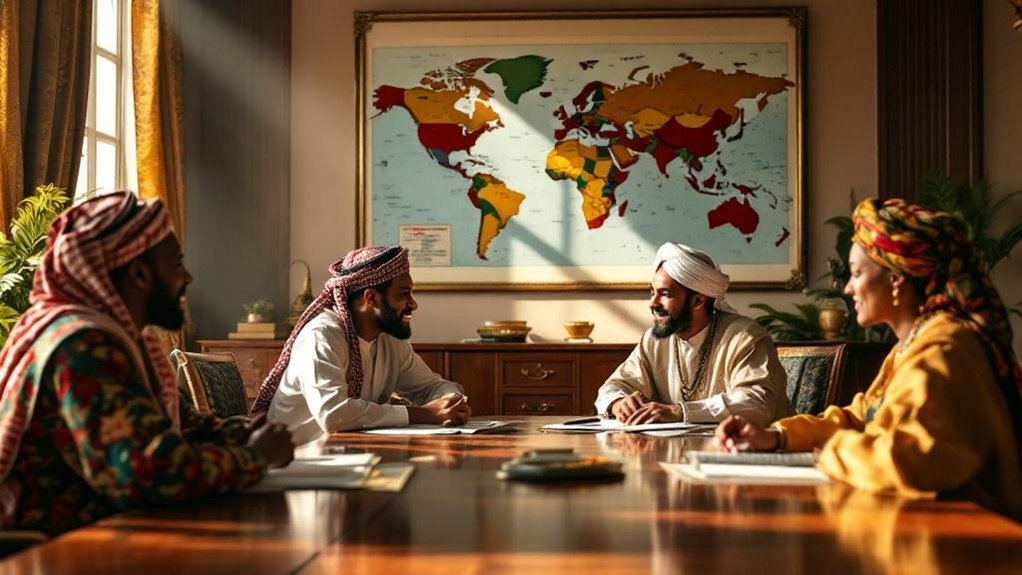
How can you effectively navigate the complex world of diplomatic negotiations without understanding cultural nuances? You can’t. Recognizing and respecting cultural differences is essential. Each culture has its own set of values, communication styles, and negotiation tactics. When you engage with international counterparts, you’re not just exchanging words; you’re interacting with deeply-rooted traditions and expectations. Misinterpreting these can lead to misunderstandings or, worse, failed negotiations.
To succeed, research is key. Study the cultural backgrounds of your counterparts. Learn about their customs, gestures, and etiquette. This knowledge helps you anticipate reactions and adapt your strategies accordingly. Furthermore, being culturally aware demonstrates respect and openness, which can facilitate smoother dialogues. Remember, awareness of cultural nuances isn’t just helpful; it’s indispensable in diplomatic success.
Building Trust and Rapport
Establishing trust and rapport is the cornerstone of successful diplomatic negotiations. When you approach a negotiation, focus on creating a connection with the other party. Be genuine, transparent, and consistent in your interactions. Show respect for their perspectives and acknowledge their emotions. Building trust isn’t just about words—your actions should align with your promises.
To help you build stronger relationships, consider these strategies:
- Be Empathetic: Understand their needs and concerns, showing that you care about their interests.
- Maintain Integrity: Guarantee your actions match your words, reinforcing trust.
- Find Common Ground: Identify shared goals or interests to create a sense of unity.
- Be Reliable: Follow through on commitments to demonstrate dependability.
These tactics will lay a strong foundation for effective negotiations.
Active Listening Skills

Active listening is an essential skill for successful diplomatic negotiations, as it guarantees you fully understand the other party’s perspective. When you truly listen, you’re not just hearing words but grasping emotions and intentions behind them. Start by maintaining eye contact, nodding affirmatively, and giving verbal acknowledgments like “I see” or “Go on.” This shows genuine interest and encourages open dialogue. Ask clarifying questions to confirm you’ve captured their message accurately. Paraphrase their points back to them, which demonstrates understanding and provides them an opportunity to correct any misinterpretations. Avoid interrupting; instead, let them finish their thoughts before you respond. Your ability to listen actively fosters trust and paves the way for more nuanced and effective negotiations.
Strategic Use of Silence
While active listening lays the groundwork for understanding, the strategic use of silence can be just as powerful in diplomatic negotiations. When you pause, you give your counterpart time to think, reflect, and perhaps reveal more than they intended. Silence can serve as a tool to emphasize a point, create a space for others to fill, or simply allow emotions to settle before proceeding. By mastering silence, you enhance your ability to steer conversations subtly and effectively.
Consider these benefits of strategic silence:
- Encourages your counterpart to speak more: People often feel compelled to fill silence.
- Signals deep thought: Demonstrates you’re considering their points seriously.
- Builds tension: Can nudge the other party toward concessions.
- Gives you time to formulate your responses thoughtfully: Avoids hasty replies.
Crafting Win-Win Solutions

When entering diplomatic negotiations, crafting win-win solutions should be a key objective, as it guarantees both parties leave the table satisfied and willing to cooperate in the future. Start by understanding the interests and needs of both sides. Listen carefully and ask questions that reveal underlying motivations. Look for common ground where both parties’ goals overlap. Be flexible and open to creative solutions that might not be immediately obvious. Use compromise strategically, ensuring that concessions benefit both sides. Clearly communicate how each solution meets shared interests, reinforcing mutual gains. Always show respect and appreciation for the other party’s position. By fostering a collaborative atmosphere, you build trust, making future negotiations smoother and more productive for everyone involved.
Managing Emotional Intelligence
Crafting win-win solutions lays a strong foundation for any negotiation, but managing emotional intelligence elevates the process to a new level. You need to understand both your emotions and those of others involved. This awareness helps you navigate complex interactions more effectively, enabling you to respond rather than react. Being emotionally intelligent means recognizing emotional cues and adjusting your approach accordingly. It’s not just about keeping your emotions in check but also about empathizing with others.
- Self-Awareness: Stay aware of your emotions and how they might affect your decisions.
- Empathy: Put yourself in others’ shoes to better understand their motivations.
- Active Listening: Pay attention to verbal and non-verbal signals from others.
- Adaptability: Adjust your strategies based on emotional feedback and changing circumstances.
Leveraging Backchannel Communications

Although often overlooked, backchannel communications can be a powerful tool in diplomatic negotiations. They let you engage in informal discussions away from the public eye, laying groundwork for formal talks. By utilizing these discreet channels, you can exchange ideas, build trust, and explore potential compromises without external pressures.
Backchannels offer you the flexibility to test reactions to proposals or gauge the other party’s priorities. They allow you to address sensitive issues more candidly, fostering an environment where creative solutions can emerge. When formal negotiations hit a roadblock, these informal routes can help you break deadlocks by providing alternative pathways.
Establishing effective backchannels requires you to identify reliable counterparts and maintain confidentiality. When used wisely, they can greatly enhance your negotiation strategy and outcomes.
Utilizing Psychological Tactics
How can understanding human behavior give you an edge in diplomatic negotiations? It’s all about tapping into psychological tactics that can subtly influence outcomes. Recognizing body language, tone, and emotional cues lets you gauge your counterpart’s true intentions. Building rapport is essential—people are more likely to agree with those they feel connected to. Use active listening to show genuine interest and establish trust. Keep in mind the power of reciprocity; small gestures can lead to larger concessions in return.
- Empathy: Understand their perspective to craft compelling arguments.
- Framing: Present ideas appealingly by focusing on benefits.
- Anchoring: Start with bold requests to set favorable negotiation baselines.
- Scarcity: Highlight limited opportunities to increase value and urgency.
Adapting to Changing Scenarios

In the ever-evolving landscape of diplomatic negotiations, adaptability becomes your greatest ally. You’re in a setting where situations shift rapidly, and sticking to a rigid plan won’t cut it. You must read the room, assess the changing dynamics, and pivot as needed. When new information surfaces or unexpected challenges arise, your ability to adjust guarantees you stay effective.
Embrace flexibility by anticipating potential scenarios. Develop multiple strategies so you’re not taken by surprise. When circumstances change, evaluate how they impact your goals and recalibrate accordingly. Being adaptable also means staying calm under pressure, making swift decisions, and maintaining open lines of communication. This agility not only helps in achieving your objectives but also earns respect from counterparts, showing you’re resilient and prepared.
Frequently Asked Questions
How Do Agents Prepare for Negotiations in Unfamiliar Environments?
You prepare for negotiations in unfamiliar environments by doing thorough research, building local alliances, and understanding cultural nuances. Adapt your communication style, stay flexible, and anticipate challenges. Practice active listening to effectively address concerns and achieve successful outcomes.
What Role Does Technology Play in Modern Diplomatic Negotiations?
You’re leveraging technology to enhance communication, gather intelligence, and guarantee security in diplomatic negotiations. It provides real-time data and virtual platforms, allowing you to strategize effectively and adapt quickly to changing circumstances, making your negotiations more efficient.
How Do Agents Handle Unexpected Disruptions During Negotiations?
Handling unexpected disruptions is like steering through a sudden storm at sea; you’ve got to stay calm, adapt quickly, and communicate effectively. Keep solutions flexible and maintain focus on your objectives to steer negotiations back on track.
What Training Do Agents Undergo for High-Stakes Negotiations?
You undergo rigorous training in communication, cultural sensitivity, and conflict resolution. You practice role-playing scenarios, study previous cases, and learn to adapt swiftly. It’s essential to develop quick thinking and emotional intelligence for high-stakes negotiations.
How Do Agents Maintain Confidentiality During Sensitive Negotiations?
Imagine you’re handling a secretive treaty. You’d guarantee confidentiality by using encrypted communication, not sharing details unnecessarily, and conducting in-person meetings when possible. Always prioritize privacy to protect sensitive information and maintain trust throughout negotiations.
At a Glance
Maneuvering diplomatic negotiations requires a delicate balance of skills. By understanding cultural nuances, building trust, and employing active listening, you set the stage for success. Remember, “a stitch in time saves nine,” so manage emotions and adapt swiftly. Strategic silence and psychological tactics can further your objectives, while crafting win-win solutions guarantees lasting agreements. Leveraging backchannel communications helps maintain momentum. With these tactics in your arsenal, you’re well-equipped to handle any diplomatic challenge that comes your way.


