

In “The Matrix,” you’ll explore profound philosophical themes that challenge your views on reality, identity, and free will. You’ll confront the nature of reality versus illusion, the illusion of choice with the red pill versus blue pill, and the debate between free will and determinism. Identity and experience come into play, alongside the complex role of technology. These themes push you to question your beliefs and perceptions of truth, uncovering deeper insights as you journey further.
The Nature of Reality: What Is Real?

Have you ever questioned what’s real? In “The Matrix,” reality isn’t what it seems. You see characters trapped in a simulated world, oblivious to the truth. This raises an essential question: how do you know what’s genuinely real? The film challenges your perceptions, pushing you to contemplate whether your experiences are authentic or merely constructs of a deeper illusion. You might relate to Neo’s journey as he discovers the layers of reality, prompting you to reflect on your own life. Are you also traversing a façade, or are you truly aware of your surroundings? The Matrix invites you to explore the boundaries of reality, encouraging you to dig deeper into what’s real versus what’s perceived.
The Illusion of Choice: The Red Pill vs. Blue Pill
As you ponder the nature of reality, the concept of choice becomes equally compelling in “The Matrix.” The iconic moment when Neo faces the choice between the red pill and the blue pill symbolizes more than just a decision; it encapsulates the illusion of free will. You might think you’re making a conscious choice, but the options presented are limited by the system itself.
Consider these key points:
- Illusion of Control: The choice feels empowering, yet it’s manufactured within the confines of the Matrix.
- Awareness vs. Ignorance: Choosing the red pill leads to harsh truths, while the blue pill offers comforting ignorance.
- Consequences of Choice: Each option carries its own set of realities, forcing you to confront what lies beyond your perception.
Free Will vs. Determinism: Are We Truly Free?
How can you truly discern whether your choices are yours or merely products of a predetermined system? In *The Matrix*, this question looms large, challenging your perception of reality. You might feel free, making decisions that shape your life, yet the film suggests that what you believe is choice could be an illusion. Neo’s journey represents the struggle between embracing free will and recognizing the constraints of determinism. When you pull the red pill, you’re not just choosing to see the truth; you’re confronting the possibility that your fate has been scripted. The tension between your desires and the forces around you forces you to question: Are you the architect of your own destiny, or just a pawn in a grand design?
Identity and Experience in The Matrix
While grappling with free will and determinism, you inevitably confront questions of identity and experience in *The Matrix*. The film challenges you to ponder what defines you: your memories, your choices, or the reality you perceive.
- Reality vs. Simulation: You wonder if your experiences in the Matrix are genuine or mere illusions. What does it mean to truly “live”?
- Personal Transformation: Neo’s journey reflects how identity can shift based on experience. Can you evolve beyond your current self?
- Collective Identity: The film also prompts you to question how societal beliefs shape individual identity. Are you just a product of your environment?
In traversing these themes, *The Matrix* invites you to explore your own sense of self and reality.
Humanity vs. Machines: The Concept of the Other
In exploring the tension between humanity and machines in *The Matrix*, you’re confronted with the complex idea of the Other. This concept highlights how you perceive machines not just as tools but as entities with their own existence. The film challenges you to question what it means to be human. As you watch, the line between human emotions and machine logic blurs, forcing you to contemplate empathy, consciousness, and identity. Are the machines truly devoid of feelings, or do they reflect aspects of humanity? This struggle reveals the potential for both connection and alienation. In the end, you’re left pondering whether the machines are the ultimate Other or a mirror reflecting your own fears and desires.
Existentialism in The Matrix: Finding Digital Meaning
As you explore *The Matrix*, you can’t help but confront the existential questions that permeate its narrative. The film challenges you *to contemplate* the nature of reality and your place within it. You find yourself questioning what it means to exist in a digital world designed to control perception.
Here are a few key existential themes to ponder:
- Choice and Freedom: Are you truly making choices, or are you just following a predetermined path?
- Identity: Who are you when your reality can be manipulated at will?
- Meaning: In a world devoid of genuine experience, how do you define purpose and significance?
These themes invite you *to reflect* deeply on your own existence and the choices you make.
Is Technology Our Savior or Our Prison in The Matrix?
How can technology simultaneously serve as both a savior and a prison in *The Matrix*? On one hand, it offers liberation—Neo’s journey showcases how advanced tech can awaken individuals from ignorance, revealing the truth of their existence. You see how characters like Morpheus use technology to provide knowledge and freedom. Yet, the same technology enslaves humanity, trapping them in a simulated reality where their minds are controlled. The machines create a false sense of comfort, making it easy for people to accept their chains. In this duality, you realize that technology can both empower you and entrap you, forcing you to question whether it’s a tool for enlightenment or a mechanism of control in your own life.
The Mind-Body Problem in The Matrix
While exploring *The Matrix*, you confront the mind-body problem, a philosophical quandary that questions the relationship between consciousness and the physical world. This film challenges your understanding of reality and existence, pushing you to reflect on how your mind interacts with your body. Here are key aspects to ponder:
- Simulation vs. Reality: The Matrix presents a simulated world that raises doubts about what’s truly real.
- Dualism: You see Neo’s struggle to reconcile his physical existence with his digital consciousness, reflecting the dualistic nature of mind and body.
- Freedom of Choice: The choice between the red and blue pill symbolizes your agency in determining your reality, emphasizing the connection between thought and action.
These themes invite you to question what it means to truly exist.
Baudrillard’s Simulacra in The Matrix
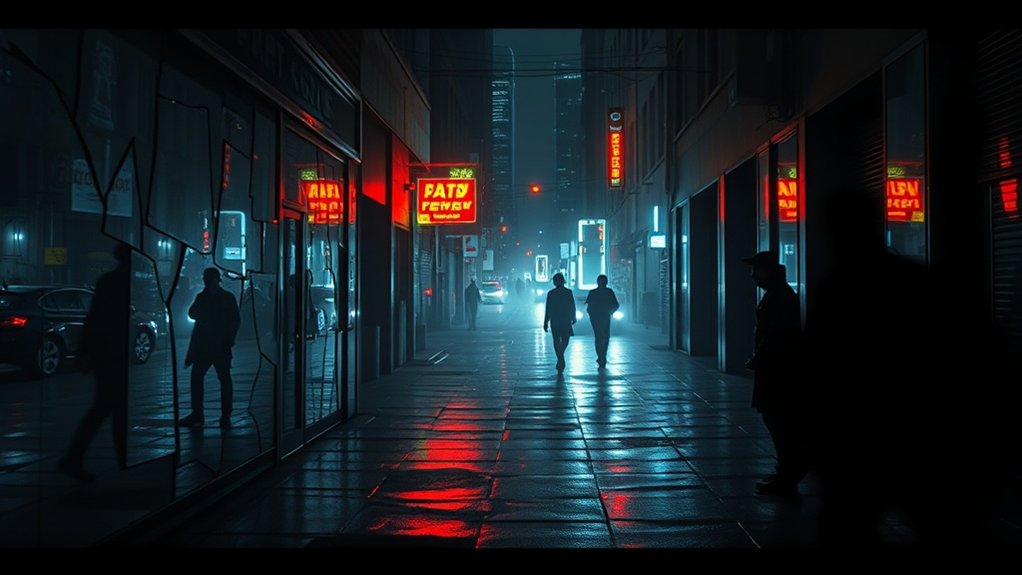
In *The Matrix*, Baudrillard’s concept of simulacra vividly illustrates the blurring lines between reality and illusion. You see characters traversing a world where perceptions are manipulated, and what you think is real often isn’t. The Matrix itself serves as a hyperreal simulation, a perfect example of Baudrillard’s theory, where the original reality is lost. When Neo awakens, he confronts a world that challenges everything he knows, forcing you to question your own perceptions. You realize that life, much like the Matrix, can be a series of constructed images, leading to confusion about what’s genuine. This exploration of simulacra invites you to ponder whether your reality is authentic or just another layer of illusion waiting to be peeled away.
How Does The Matrix Challenge Our Perceptions of Truth?
The Matrix not only embodies Baudrillard’s simulacra but also compels you to reevaluate what truth means in your own life. As you immerse yourself in its narrative, you’re faced with questions that challenge your understanding of reality:
- Reality vs. Illusion: The film blurs the lines between what’s real and what’s simulated, pushing you to question your own beliefs.
- Freedom of Choice: Characters grapple with the consequences of their choices, urging you to reflect on how much control you truly have over your own life.
- Societal Constructs: The Matrix critiques societal norms, prompting you to think about the beliefs you accept without questioning.
Ultimately, it invites you to seek your own truth, encouraging a deeper exploration of existence and perception.
Frequently Asked Questions
How Does Neo’s Journey Reflect Personal Growth and Self-Discovery?
Neo’s journey reflects personal growth and self-discovery as you witness him embrace his true potential, confront fears, and challenge reality. Each step transforms you, revealing the strength and choices that define your existence.
What Role Does Fate Play in the Characters’ Lives?
Fate intertwines with the characters’ lives, shaping their choices and paths. You see how Neo grapples with destiny, questioning whether he’s bound by fate or if he can forge his own reality.
How Does the Film Address the Concept of Fear?
The film tackles fear by showing how it paralyzes you, trapping you in a simulated reality. Characters confront their fears, ultimately discovering that true freedom lies in embracing uncertainty and breaking free from mental confines.
Can the Matrix Be Seen as a Critique of Modern Society?
Yes, you can see The Matrix as a critique of modern society. It highlights how technology can manipulate reality, encouraging you to question authority, consumerism, and the consequences of living in a fabricated world.
What Philosophical Influences Shaped the Creation of the Matrix?
When you peel back the layers, you’ll find influences like Descartes’ skepticism, Baudrillard’s simulations, and Kant’s transcendental idealism. These thinkers shaped the film’s exploration of reality, perception, and the nature of existence itself.
At a Glance
In the end, “The Matrix” pulls back the curtain on our understanding of reality, like a magician revealing his secrets. It makes you ponder the threads that bind your existence, inviting you to question not just what you see, but what you feel. As you navigate this labyrinth of thought, remember: the choice is yours. Will you embrace the truth, however intimidating, or retreat into the comforting embrace of illusion? The journey is yours to take.


