

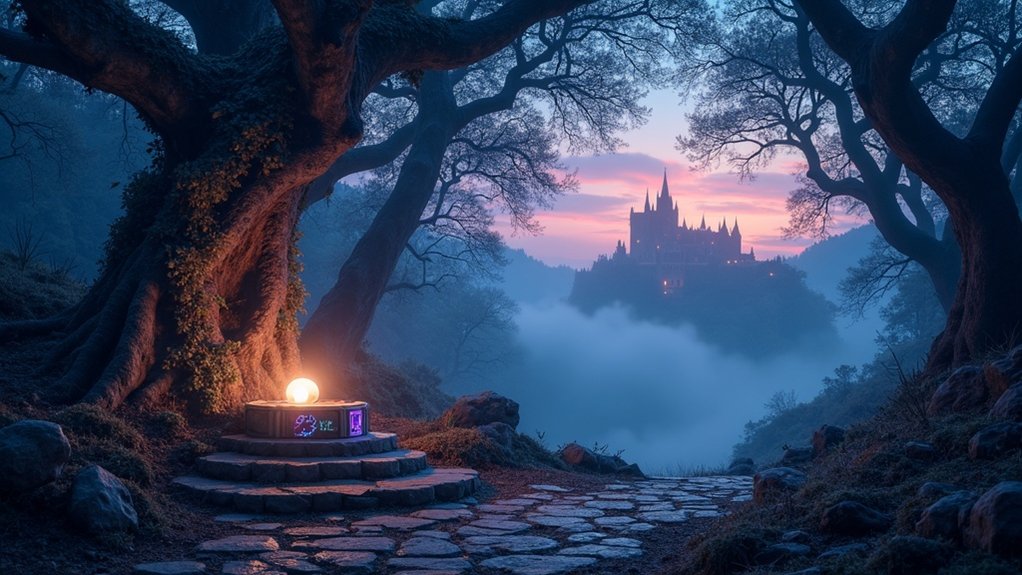
To illustrate a fascinating wizardry world, start by establishing a unique magic system that shapes society. Define clear rules governing magic use, including its limitations and costs. Design enchanting landscapes that reflect your magic’s essence, using vibrant colors and responsive flora. Incorporate magical creatures that enrich your plot and settings. Enhance the atmosphere with evocative sounds and symbols, creating immersion. By focusing on these elements, you’ll create a memorable domain, and there’s much more to explore.
Understanding the Foundations of a Unique Magic System

Creating a compelling magic system is like constructing the backbone of your wizardry world. You need a foundation that resonates with your story and its characters. Think about the source of your magic—does it stem from nature, ancient artifacts, or perhaps a deity? Next, consider how it’s perceived by society. Are wizards revered, feared, or misunderstood? Defining the limitations and costs of magic adds depth, ensuring it’s not overused or taken for granted. You’ll also want to explore the different branches or schools of magic, each with its unique flavor and specialties. This variety can spark conflict and intrigue, enriching your narrative. Ultimately, your magic system should feel integral, enhancing the world rather than overshadowing it.
What Rules Should Your Magic System Have?
While magic can be a source of wonder, establishing clear rules is vital to maintain balance in your wizardry world. First, define how magic is accessed—whether through innate ability, study, or rare artifacts. Next, outline limitations. What can’t magic achieve? Consider the cost of using magic; maybe it drains energy or requires sacrifices. Additionally, think about consequences. Will casting a spell have repercussions on the caster or their surroundings? Establishing a hierarchy also helps—are there different schools or types of magic? Finally, guarantee consistency. Your readers should easily understand the rules and see them apply throughout your story. With these guidelines, you’ll create a believable and intriguing magic system that enhances your wizardry world.
Designing Enchanting Landscapes for Your Magical World

As you explore designing enchanting landscapes for your magical world, consider how these settings can reflect the unique aspects of your magic system. Think about vibrant forests where trees whisper secrets or mountains that shimmer with ethereal light. Use colors and textures that evoke the essence of your magic; perhaps rivers flow with liquid crystal or skies shift in hues based on spells cast below. Incorporate flora that reacts to magic, like flowers blooming in response to enchantments. Balance beauty with mystery, creating hidden glades or enchanted ruins that invite exploration. Let your landscapes shape the experiences of your characters, guiding their journeys and deepening their connection to the world you’ve crafted. Each detail should enhance the enchanting atmosphere.
Incorporating Magical Creatures and Beasts Into Your Setting
How do magical creatures enhance the allure of your world? They add depth, intrigue, and a sense of wonder that captivates your audience. Think about the role each creature plays; do they serve as allies, foes, or whimsical companions? Introduce unique traits—like a dragon’s shimmering scales or a phoenix’s rebirth—that enrich your narrative. Consider their habitats; a forest filled with mischievous fairies or a mountain home to wise, ancient beasts can shape your setting’s mood. Don’t forget to weave them into your plot; their actions can drive conflict or offer solutions. By integrating these creatures thoughtfully, you’ll create a vibrant, immersive atmosphere that invites readers to explore every corner of your magical world.
How Color and Texture Influence Magical Atmospheres

To create a truly enchanting atmosphere in your wizardry world, consider how color and texture shape the experience for your readers. Vivid colors can evoke emotions; deep purples and lush greens suggest mystery and magic, while bright golds and silvers signify hope and power. Texture adds depth—smooth surfaces can feel ethereal, while rough, jagged elements bring a sense of danger.
Pair contrasting colors to create tension or harmony, guiding readers through your world’s moods. For instance, a fiery red might clash with a cool blue, heightening a sense of urgency. Don’t forget lighting! Soft glows can transform ordinary scenes into enchanting ones. By thoughtfully combining color and texture, you’ll immerse your readers in a magical experience they won’t forget.
Creating Memorable Characters With Magical Abilities
While crafting memorable characters with magical abilities, it’s essential to ground them in relatable traits and motivations. This connection makes them feel real and engaging. Consider these key elements:
- Backstory: Give your character a history that shapes their magical journey. Maybe they’re seeking revenge or redemption.
- Flaws: Perfect characters are boring. Infuse them with insecurities or fears that create internal conflicts.
- Goals: Define what they want. Are they aiming to master their powers or protect their loved ones?
- Relationships: Explore how they interact with others. Friendships, rivalries, or mentors can add depth to their character arc.
Enhancing Atmosphere With Sounds and Symbols in Magical Realms

Crafting a wizardry domain goes beyond just memorable characters; it’s about enveloping your audience in an immersive atmosphere. To enhance this atmosphere, think about the sounds that fill your magical domain. The whisper of spells, the crackle of energy, or the distant roar of mythical creatures can transport your readers immediately.
Incorporate symbols that resonate with your themes, like ancient runes or enchanted artifacts, to deepen the connection. You can describe how the air hums with power when a wizard casts a spell or how a mysterious sigil glows softly, hinting at secrets yet to be revealed. By intertwining sounds and symbols, you’ll create a rich tapestry that draws your audience deeper into your enchanting domain.
Frequently Asked Questions
How Do I Choose a Name for My Wizarding World?
To choose a name for your wizarding world, brainstorm unique words or phrases that evoke magic. Mix languages, use nature elements, or draw inspiration from mythology. Let your imagination guide you to something truly enchanting.
What Cultural Influences Can Shape My Magical Setting?
Your magical setting can draw from folklore, mythology, art, and historical cultures. Explore various traditions, languages, and societal norms, blending them creatively to enrich your world and give it depth and authenticity.
How Can I Create a Magical Economy?
To create a magical economy, you’ll need enchanted currencies, trade routes between domains, and vibrant marketplaces. Imagine bustling stalls overflowing with potions and artifacts—each transaction sparking wonder, making your world feel alive and thriving.
What Role Do Historical Events Play in My World?
Historical events shape your world’s culture, politics, and conflicts. They influence societal norms and character motivations, creating depth. You’ll find that weaving these events into your narrative enhances the realism and richness of your setting.
How Do I Balance Humor and Seriousness in My Narrative?
You balance humor and seriousness by weaving light-hearted moments into tense scenes, allowing characters to relieve tension. Use witty dialogue and situational irony, but guarantee the stakes remain high to maintain emotional impact.
At a Glance
As you weave your wizardry world, remember that magic thrives in the unexpected. Picture a shimmering river that flows backward, reflecting a sky of swirling colors, just as you meet a creature that speaks in riddles. Coincidences like these breathe life into your setting, making every corner an adventure. Embrace the quirks and wonders of your creation, and let your imagination run wild. With each detail, you’ll draw readers into a world that feels both enchanted and alive.


